

What this verification route checks
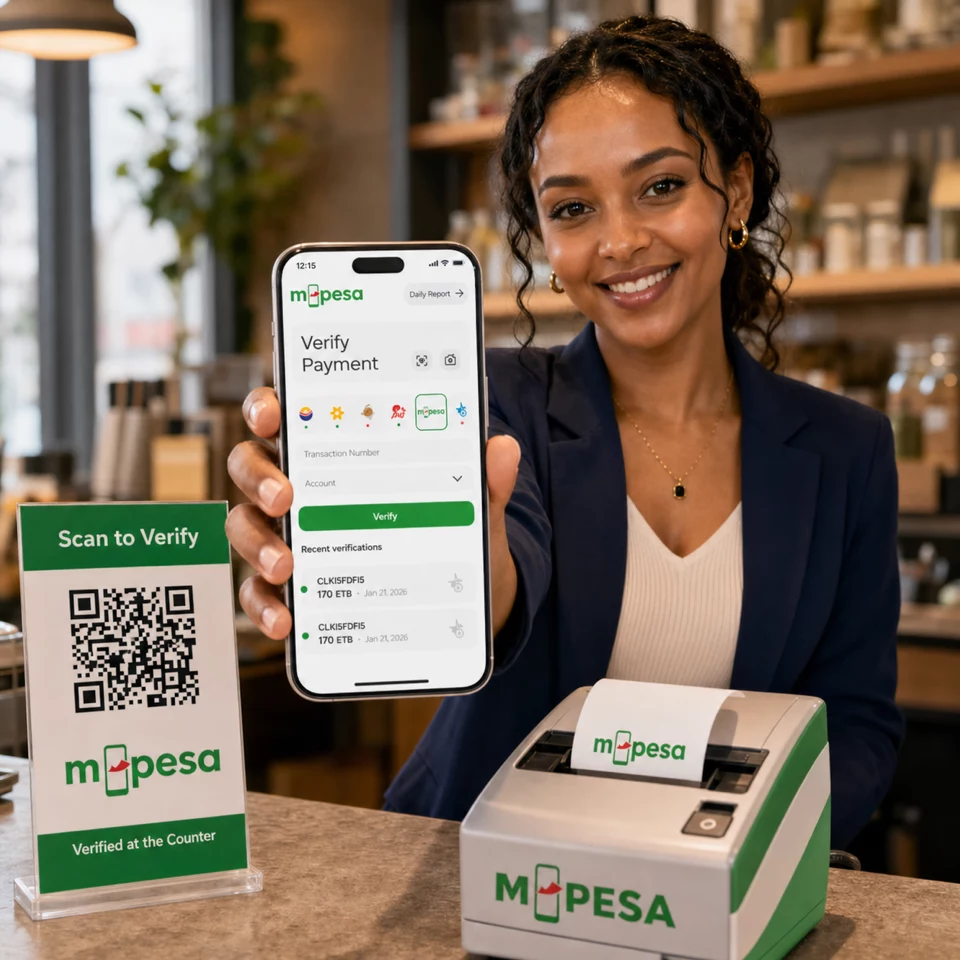
Verify.ET uses the submitted MPESA receipt details to start a traceable verification request. The result popup shows the request status, receipt details, and repeat confirmation signals after the first run.
Bank Verification Guide
Check an M-Pesa Ethiopia receipt online by entering the transaction number from the Safaricom Ethiopia M-Pesa SMS or receipt. No account is needed to run the check. This page is for M-Pesa in Ethiopia only, not M-Pesa Kenya or other countries.
M-Pesa Ethiopia receipt checks for wallet payments, merchant orders, airtime bundles, and support follow-up.
Who this route is for
Merchants and support teams accepting MPESA payments that need a consistent verification trail.
Required Fields
Step-by-step
Need the SWIFT code instead? View MPESA SWIFT / BIC details.
Comparing tools? See Verify.ET vs manual checks, gateways, and open-source scripts.
Verify.ET uses the submitted MPESA receipt details to start a traceable verification request. The result popup shows the request status, receipt details, and repeat confirmation signals after the first run.
A successful MPESA check returns structured verification status plus available receipt fields such as amount, parties, reference, and timestamps when the provider data is available. Pending means the job is still processing; not found or failed means the details did not resolve to a usable receipt—re-check typing, suffixes, and provider status before releasing goods.
Telebirr or CBE Birr IDs will not validate on the MPESA route. Match the provider to the form.
Always re-verify the transaction number instead of trusting a forwarded image from a previous purchase.
Use the MPESA route, enter the transaction number from the M-PESA receipt, and submit it to get a Verify.ET verification result.
No. This page checks M-Pesa Ethiopia receipts from Safaricom Ethiopia only. Transaction numbers from M-Pesa in Kenya or other countries will not be found.
No. The MPESA verification route is built around the transaction number from the wallet receipt.
Yes. Developers can submit MPESA transaction numbers through the Verify.ET API and handle webhooks or polling.

